The GLP-1 Playbook
1 in 8 American adults are now taking a GLP-1, and nearly half will discontinue within the first year -- many due to side effects, muscle loss, and nutritional gaps that a structured clinical protocol could have prevented. This is that protocol, built as decision trees, reference tables, and clinical checklists you can use starting this week.
Get the Playbook — $7 PDF · Instant download · Use it with your next patientGLP-1s are the most prescribed drug class in metabolic medicine. The clinical protocols haven't caught up.
These drugs are powerful. They're also more nuanced than most training covers. Patients are asking about them -- or already on them -- and clinicians don't have a clear protocol for what to do before starting, how to manage nutrition when appetite disappears, how to protect against muscle loss, or how to handle the side effects.
The GLP-1 Playbook is the protocol that fills that gap.
Whether you're evaluating GLP-1 therapy, supporting patients already on it, or prescribing it daily -- this is what should have existed before any of us started.
Instant download. Use it with your next patient.
Here's what's inside
Six sections. Everything you need to manage GLP-1 therapy the right way.
A drug selection framework
Semaglutide vs. tirzepatide vs. the emerging triple agonists like retatrutide. Oral vs. injectable. How they differ, who they're best suited for, and a decision tree based on your patient's clinical profile.
Why the drug alone isn't enough
There are four things that determine whether your patient's results last or reverse the moment they stop. Most protocols ignore all of them. This one gives you specific targets for each, set before the first dose.
What to do before day one
The baseline labs to order, the nutrition targets to set, the body composition data to capture, and how to set patient expectations before the first dose. Most of this gets skipped. All of it matters.
Nutrition during appetite suppression
Your patient isn't hungry -- but they still need to hit specific protein and micronutrient targets. Meal strategies, minimum thresholds, and how to prevent the nutritional deficiencies that the data says are coming if nobody intervenes.
How to prevent muscle loss during treatment
Without the right plan, a significant portion of the weight your patients lose is muscle -- not fat. How to prevent that, the interventions to pair with the medication, and the red flags to catch early.
Side effect protocol
Nausea. Diarrhea. Constipation. Fatigue. Hair thinning. These aren't if -- they're when. A specific clinical action for each one, ready before your patient needs it.
Here's a sneak peek
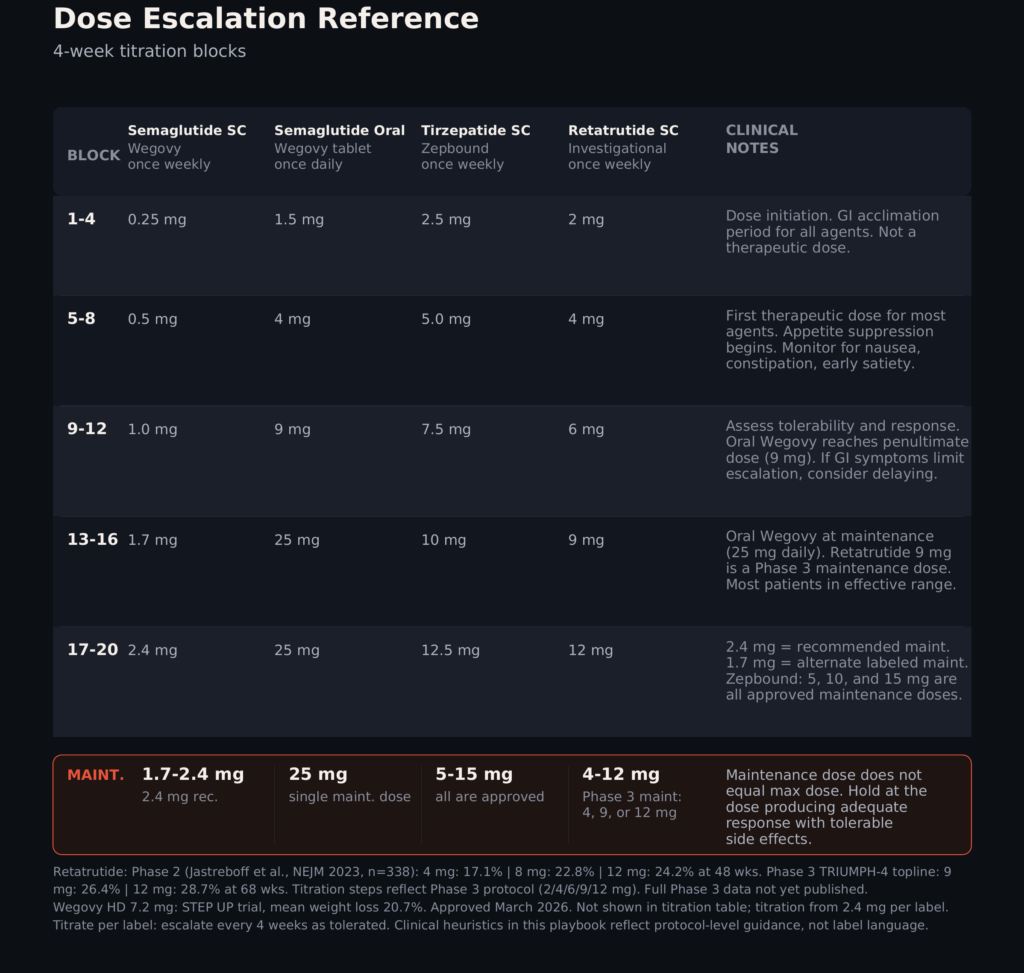
Instant download. Use it with your next patient.
Six sections. Decision trees, dosing references, and checklists you'll use with every GLP-1 patient going forward.
This isn't a textbook or a pharmacology review. It's the clinical playbook that sits between the drug and the outcome. The document you keep on your desk, not on a shelf.

Andrew Reid
I've spent the last 13 years training clinicians through Medgeeks -- the platform I built in 2013 that's now helped over 10,000 practitioners. I built this playbook because I kept seeing clinicians prescribing these drugs without a clear protocol around them, and seeing what happens to patients when that protocol doesn't exist. It's the same playbook I use when I consult with clinicians one-on-one, and the same one I follow with my own clients.
Physician Assistant (UC Davis) · MS Personalized Nutrition (UConn) · Precision Nutrition (UConn) · Dietetics (CSULA) · Founder, Medgeeks
Common questions
What does the GLP-1 Playbook cover?
Drug selection (semaglutide vs tirzepatide vs retatrutide), baseline assessment before starting, nutrition during appetite suppression, lean mass protection, side effect management, and monitoring throughout treatment.
Who is this for?
Clinicians evaluating, prescribing, or supporting patients on GLP-1 therapy -- MDs, DOs, PAs, NPs, and RDNs working in metabolic medicine, primary care, or weight management.
How is this different from standard prescribing information?
Standard prescribing information covers dosing and contraindications. This playbook covers the clinical protocol that surrounds the drug: what to assess before starting, how to manage nutrition when appetite disappears, how to prevent the muscle loss that occurs in up to 40% of patients, and how to handle side effects before they cause discontinuation.
What format is it?
PDF. Delivered instantly after purchase. Built as decision trees, reference tables, and clinical checklists you can use at the point of care.
The GLP-1 Playbook
Decision trees, dosing references, and clinical checklists for GLP-1 therapy. Drug selection. Nutrition. Lean mass protection. Side effects. $7
Get the Playbook NowPDF · Instant download · No subscription
GLP-1 prescriptions are growing every month. This is the clinical protocol designed to keep up.